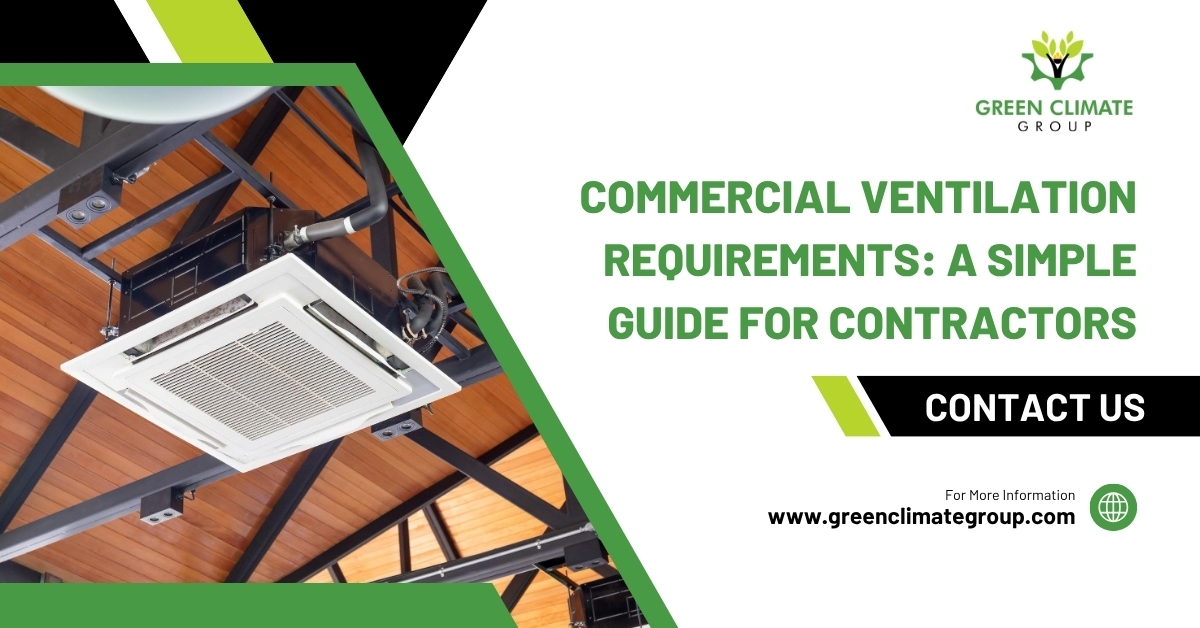
Clean air is not optional in a commercial building. It affects comfort, safety, energy use, and code compliance. If the ventilation system is not planned well, the building can feel stuffy, humid, or uncomfortable.
Commercial ventilation requirements help building owners and contractors meet indoor air quality standards. These rules guide how much outdoor air a building needs and how HVAC equipment should support healthy airflow.
Commercial ventilation requirements are the rules used to move fresh air in and stale air out.
They depend on the building type, size, occupancy, and use. An office, restaurant, warehouse, and gym will not need the same ventilation setup.
A good ventilation system should support:
The goal is simple. Keep the building safe, comfortable, and code-ready.
Proper ventilation helps people breathe cleaner air inside commercial spaces. It also helps HVAC systems work better.
When airflow is poor, odors, moisture, dust, and carbon dioxide can build up. This can lead to comfort complaints and indoor air quality problems.
Good ventilation can help:
It also connects with HVAC energy efficiency. A smart ventilation design can improve air quality without wasting energy.
Most commercial projects must follow local mechanical codes and building codes. Many designs also use ASHRAE ventilation standards as a guide.
Contractors may need to review:
In Connecticut, requirements may change based on the building type and project scope. So it is always best to check the local code before choosing equipment.
Every building has different airflow needs. Before selecting equipment, contractors should look at how the space is used.
Important factors include:
For example, a restaurant needs kitchen exhaust and make-up air. An office needs steady, fresh air and filtration. A warehouse may need exhaust fans and strong air movement.
Offices need fresh air, good filtration, and balanced airflow. Meeting rooms may need extra ventilation because people gather in smaller spaces.
Retail spaces need ventilation that can adjust to changing traffic. Busy hours may require more fresh air.
Restaurants need exhaust hoods, make-up air, and odor control. The system must remove heat, smoke, grease, and kitchen fumes.
Warehouses often need air circulation, exhaust fans, and dust control. Large spaces need careful airflow planning.
Gyms need stronger ventilation because people breathe harder during exercise. Humidity and odor control are also important.
These three parts work together.
Outdoor air brings fresh air in. Exhaust air removes stale or polluted air. Make-up air replaces the air that exhaust fans remove.
If these are not balanced, the building can have pressure issues. Doors may feel hard to open. Drafts may increase. HVAC systems may also work harder.
Equipment that can help includes:
Explore our commercial rooftop unit guide to choose the right system.
Ventilation improves indoor air quality, but filtration matters too.
A complete system should bring in fresh air and filter the air moving through the building. This helps reduce dust, odors, and airborne particles.
Indoor air quality can improve with:
Ventilation should not waste energy. Bringing outdoor air into a building can increase heating and cooling loads.
Smart equipment can help reduce that waste.
Useful options include:
A building may need ventilation upgrades if people notice:
These signs should not be ignored. A contractor can inspect the system and suggest the right fix.
Contractors should choose ventilation equipment based on building needs, code requirements, and long-term performance.
Useful equipment may include:
The right choice depends on the building type. A restaurant may need make-up air and kitchen exhaust. An office may need outdoor air control and better filtration. A warehouse may need exhaust fans and air circulation.
Before starting a commercial ventilation project, review these steps:
This helps reduce errors and supports better long-term results.
Commercial ventilation requirements help contractors design safer, cleaner, and more comfortable buildings. The right system brings in fresh air, removes stale air, and supports code compliance. If you need reliable HVAC supplies for a commercial project, Green Climate Group LLC can help. We provide Connecticut contractors with eco-friendly HVAC equipment built for today’s commercial spaces.